
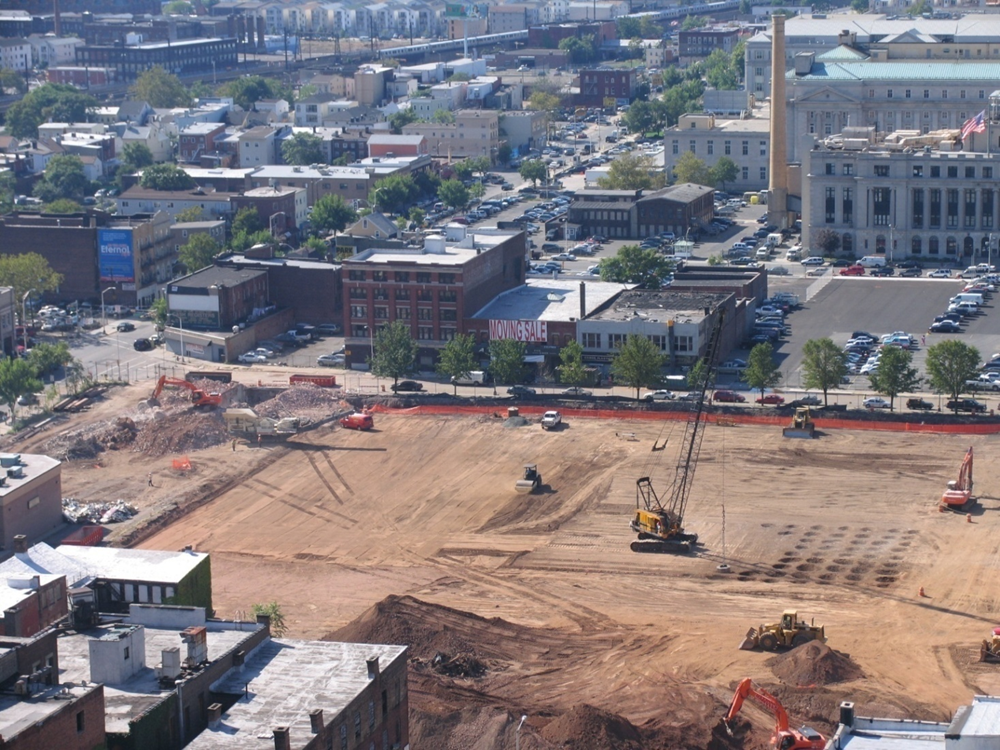
Project Summary/Scope:
The Prudential Center site encompasses an entire city block that had a varied history of uses ranging from a cemetery in the late 18th century, to a rail yard and train station for the now- defunct Central Jersey Railroad in the 19th and early 20th centuries, to commercial development in the latter half of the 20th century. Each of these prior uses presented challenges to the design and construction of the Prudential Center that required innovative engineering solutions, including archaeological investigation and exhumation of the former cemetery occupants, protection of historic buildings surrounding the site, and extensive demolition to remove old train bridge foundations.
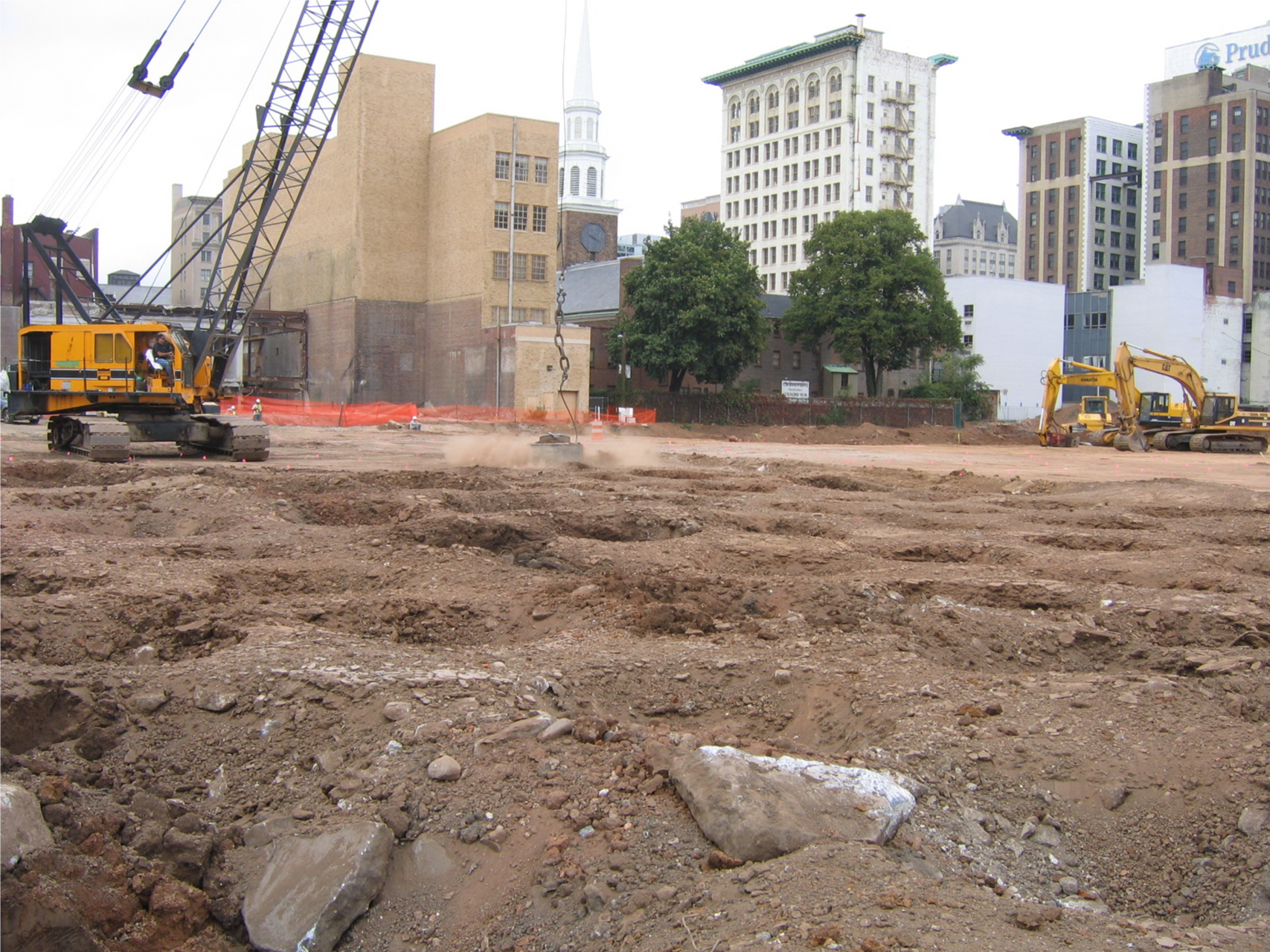
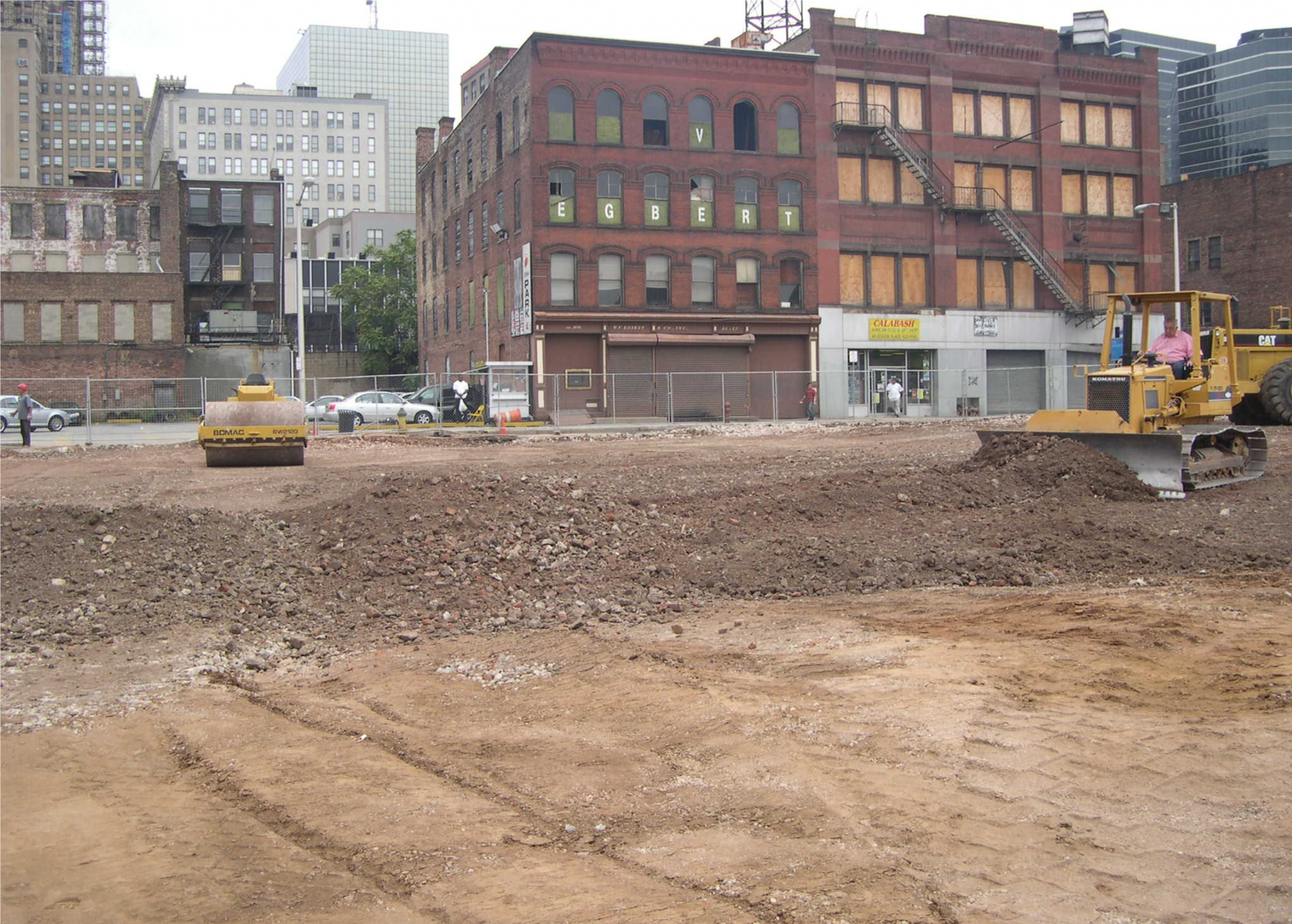
The design team was required to develop potential foundation systems for the arena. Several foundation concepts were evaluated for cost and constructability, including: driven piles, drilled shafts, and shallow foundations on improved subgrade. Following a detailed cost analysis and value engineering exercise, the decision was made to support the arena on spread footings following the completion of a multi-phased ground improvement program consisting of a combination of dynamic compaction and removal and replacement.
To evaluate achievable allowable bearing pressure as part of the design, a dynamic compaction test section was performed within the building footprint prior to the start of production work; the test section included the performance of additional pre- and post-improvement SPT and CPT testing to evaluate the program effectiveness. Based on the results of the test program, an increase of the allowable design bearing pressure from 2 tons per square foot (tsf) to 3 tsf was realized. This reduced the expected foundation costs by 30% and gained sufficient time in the schedule to allow for the completion of the arena in time for the New Jersey Devils 2007- 2008 hockey season.
Complementary Technologies Used:
Excavation and Replacement
Alternate Technologies:
Driven pile foundations were initially under consideration for the project, but a robust test program which confirmed that deep dynamic compaction could achieve the needed foundation support requirements was undertaken, and a significant cost savings was realized.
|
|
Performance Monitoring:
Ground response (i.e. crater depth) was monitored during the course of the work, along with vibration monitoring to assess the impact on off-site structures and utilities. Seismic isolation trenches were installed around the site perimeter to assist in mitigating the impact of off-site vibrations. Post-improvement testing consisting of Standard Penetration Tests was conducted following the DDC work to verify that the stated performance criteria was achieved.
Cost Information:
Ground improvement work and shallow foundations was a cost of approximately $1,500,000; a driven pile alternative was estimated to be on the order of $3,000,000.
Case History Author:
Chris Woods, P.E., G.E., BC.GE, P.Eng, CEng MIEI, F.ASCE
Project Technical Paper:
Woods, C.B., Drumheller, J.C., and Huber, K.A. (2013). “Building the Devil’s Playground: How a Ground Improvement Program Eliminated the Need for Pile Foundations.” In proceedings for the 38th Annual Conference on Deep Foundations, Phoenix, Arizona, September 25-28.