
Project Summary/Scope:
As a result of changes to the New York City Building Code (NYCBC) in 1996, seismic and liquefaction studies became more common in an area that previously had not been considered a high seismicity area. In the case of a hangar expansion at JFK Airport in Queens, New York, these changes led to an analysis that demonstrated high liquefaction potential that needed mitigation. Deep dynamic compaction was chosen as the most cost-effective ground improvement approach.
The subsurface conditions at the JFK site generally consisted of an approximately 6-foot-thick layer of hydraulically placed sandy fill underlain by glacial outwash sands which extended to a depth of at least 100-feet. Groundwater existed approximately 7-feet below the existing site grades.
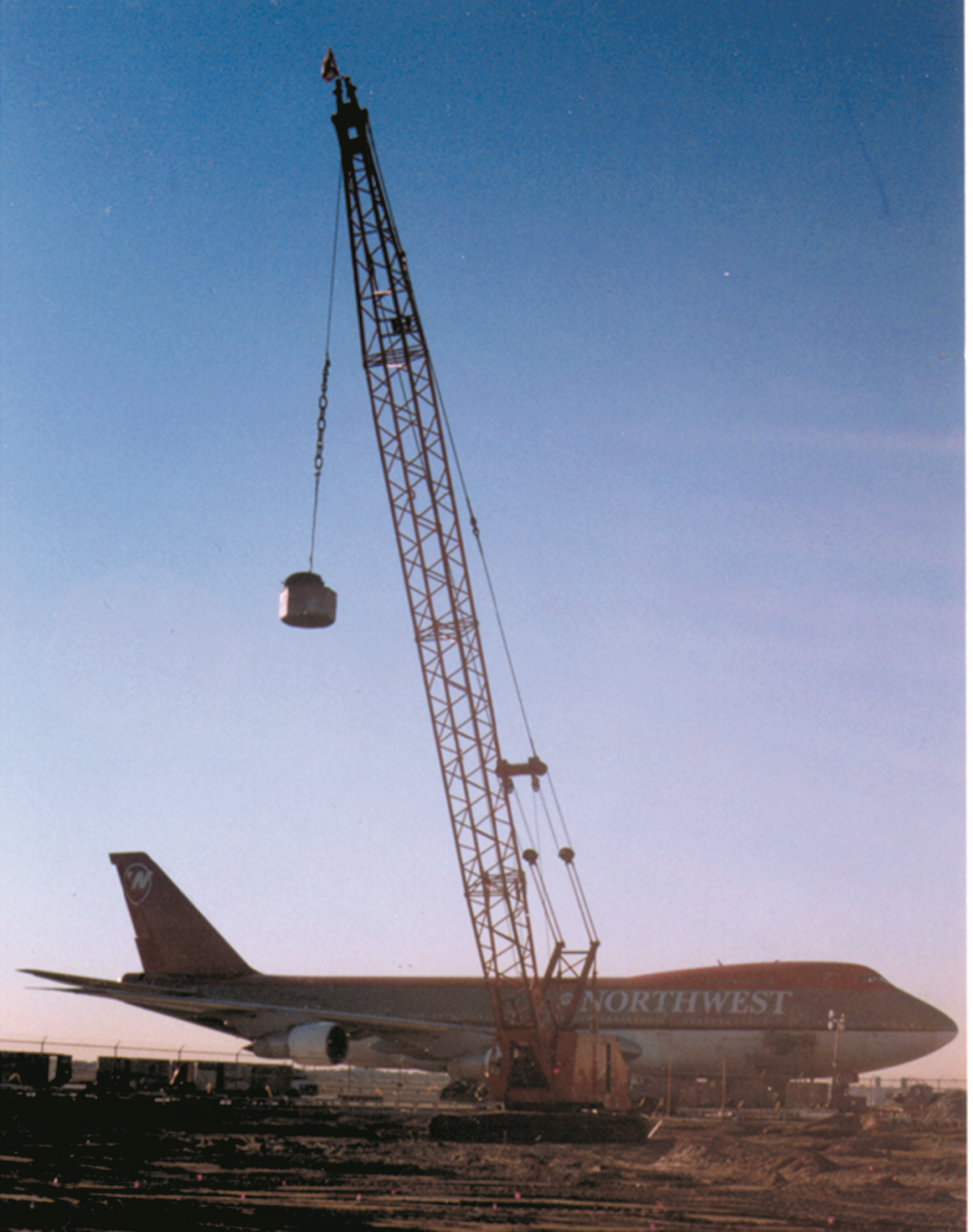
The dynamic compaction program consisted of two high-energy passes of a 15-ton weight dropped from a height of up to 60-feet, utilizing a 10-foot grid spacing with four drops completed at each point across the entire site. In calculating the depth of influence of the weight/height combination to be used, an n-value of 0.55 was chosen, indicative of the sandy, liquefiable soils. Based on the implementation of the program, a total applied energy of 242 kJ/m3 was imparted to the liquefiable material.
Given the location of this project being within an existing, operating airport, extensive vibration monitoring was conducted; additionally, seismic cutoff trenches were installed at several locations to help mitigate the impact of vibrations on the existing structures and utilities.
Complementary Technologies Used:
None
Alternate Technologies:
None
Performance Monitoring:
Ground response (i.e. crater depth) was monitored during the course of the work, along with vibration monitoring to assess the impact on off-site structures and utilities. Post-improvement SPT-testing indicated that significant improvement was observed within the upper 17-feet of material, with a maximum depth of influence observed at about 25-feet.
Cost Information:
Cost information was unavailable for this project.
Case History Author:
Chris Woods, P.E., G.E., BC.GE, P.Eng, CEng MIEI, F.ASCE
Project Technical Paper:
Meyer, M.E., et al, (2001). “Liquefaction Mitigation at JFK Airport Using Dynamic Compaction.” In proceedings for 2001: A Geo-Odyssey, (Geotechnical Special Publication No. 113), ASCE, Virginia Tech, Blacksburg, VA, June 9-13.