
Project Summary/Scope:
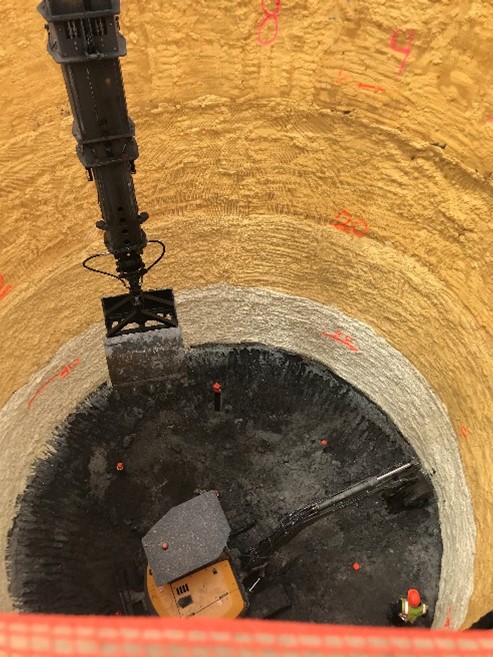
The construction of a 9700m, 180cm diameter effluent pipe required a launching shaft at the existing sewage treatment plant and a receiving shaft at a barrier island adjacent to the Atlantic Ocean. Ground freezing was used to provide excavation support and groundwater control. The unique aspect of this project was that there was no impermeable stratum at the shafts inverts, and it was necessary to freeze a bottom plug approximately ten meters below each shaft.
Additional ground was frozen outside each shaft to provide face stability for the TBM break-in and break-out. Freeze pipes were drilled at approximately one-meter spacing around the perimeter of each shaft. Interior pipes were more widely spaced and drilled inside the shaft to provide the frozen bottom plug. Freeze pipe drilling was completed using conventional mud rotary drilling techniques. After each pipe was drilled it was surveyed for verticality and pressure tested. The freeze pipes within the shaft were insulated to the shaft inverts to minimize the amount of frozen soil to be excavated.
Freezing was accomplished using two mobile refrigeration units at each shaft. Two plants were required for the formation freezing, while only one was needed to maintain the freeze. The calcium chloride brine was circulated at a temperature of -32oC. Freezing time was approximately six weeks.
As the excavation progressed, polyurethane foam insulation was applied to the exposed frozen earth to provide insulation. When the invert was reached on the launching shaft, a concrete collar and tunnel seal were installed so that TBM operations could begin.
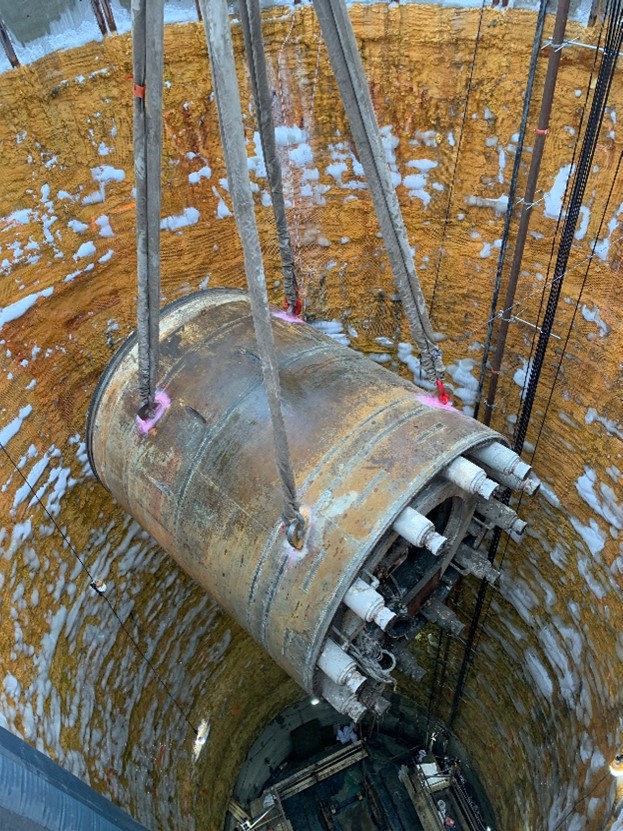
As the tunnel progressed, the freezing system on the Receiving shaft was initiated, including a large frozen mass for the break-in. Due to the required time to complete the tunnel, there was no advantage to turning on the freeze and maintaining it. As the TBM advanced towards the Receiving shaft, and segments were installed within the frozen mass, a comprehensive grouting program was conducted to provide a water-tight seal at the rear of the TBM.
Entry into the Receiving Shaft went according to plans and the TBM was successfully extracted.
Complementary Technologies Used: None
Alternate Technologies: Diaphragm Walls with Jet Grout Bottom Plug. Secant Piles. The problem was there was no impermeable bottom. A frozen plug was used to provide bottom stability.

Performance Monitoring: Ground temperature, groundwater elevations and freezing plant operating data were continuously monitored.
Cost Information: Cost information is confidential and not available
Case History Author/Submitter: J. Sopko and S. Coughlin, Keller North America, jasopko@keller-na.com
Project Technical Paper: Sopko, J. and Coughlin, S. Ground Freezing for Two Frozen Shafts at the Bergen Point Outfall Tunnel. ITA-AITES World Tunnel Congress, WTC2022 and 47th General Assembly Bella Center, Copenhagen, April 22-28, 2022