Submitted by admin on Wed, 05/30/2018 - 19:21
Photos
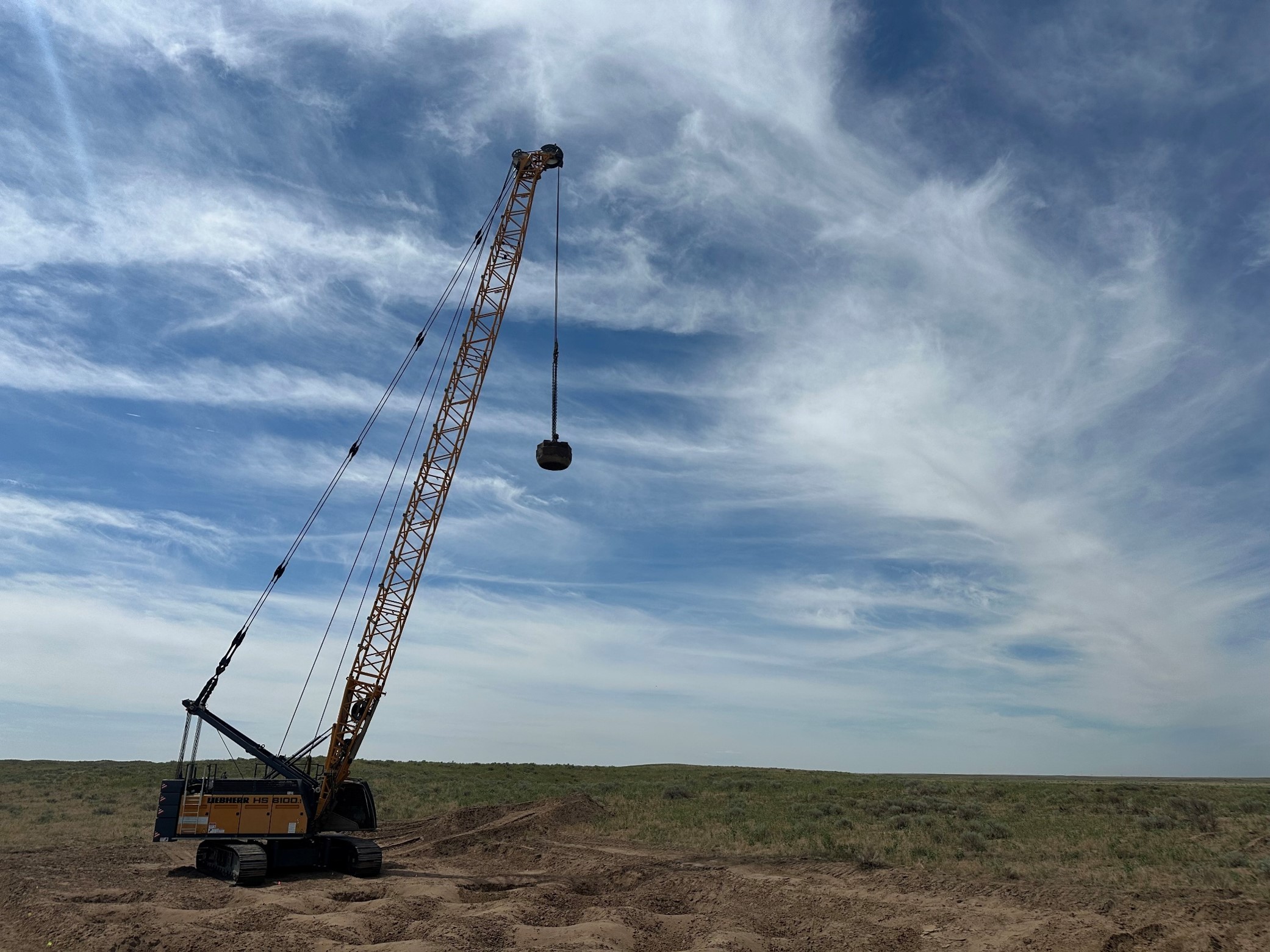
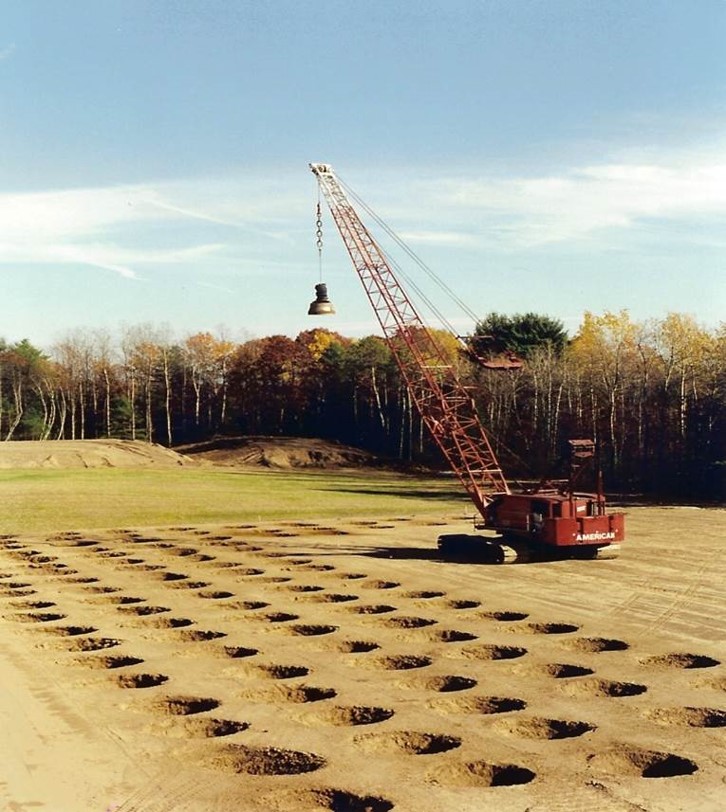
Dynamic compaction on a sandy site in Colorado.  (Courtesy of Chris Woods)
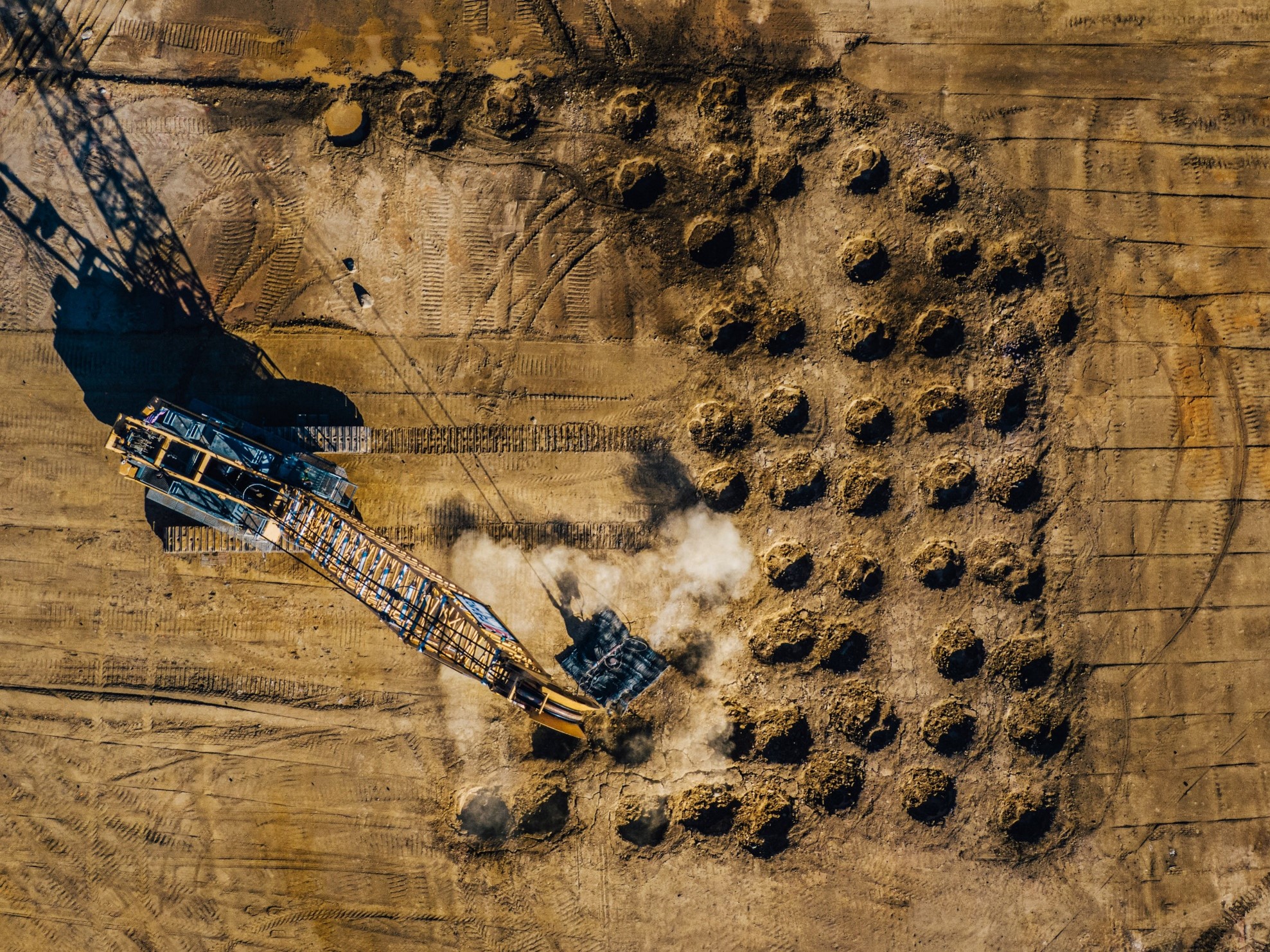
Aerial view of dynamic compaction (Courtesy of Menard Group)
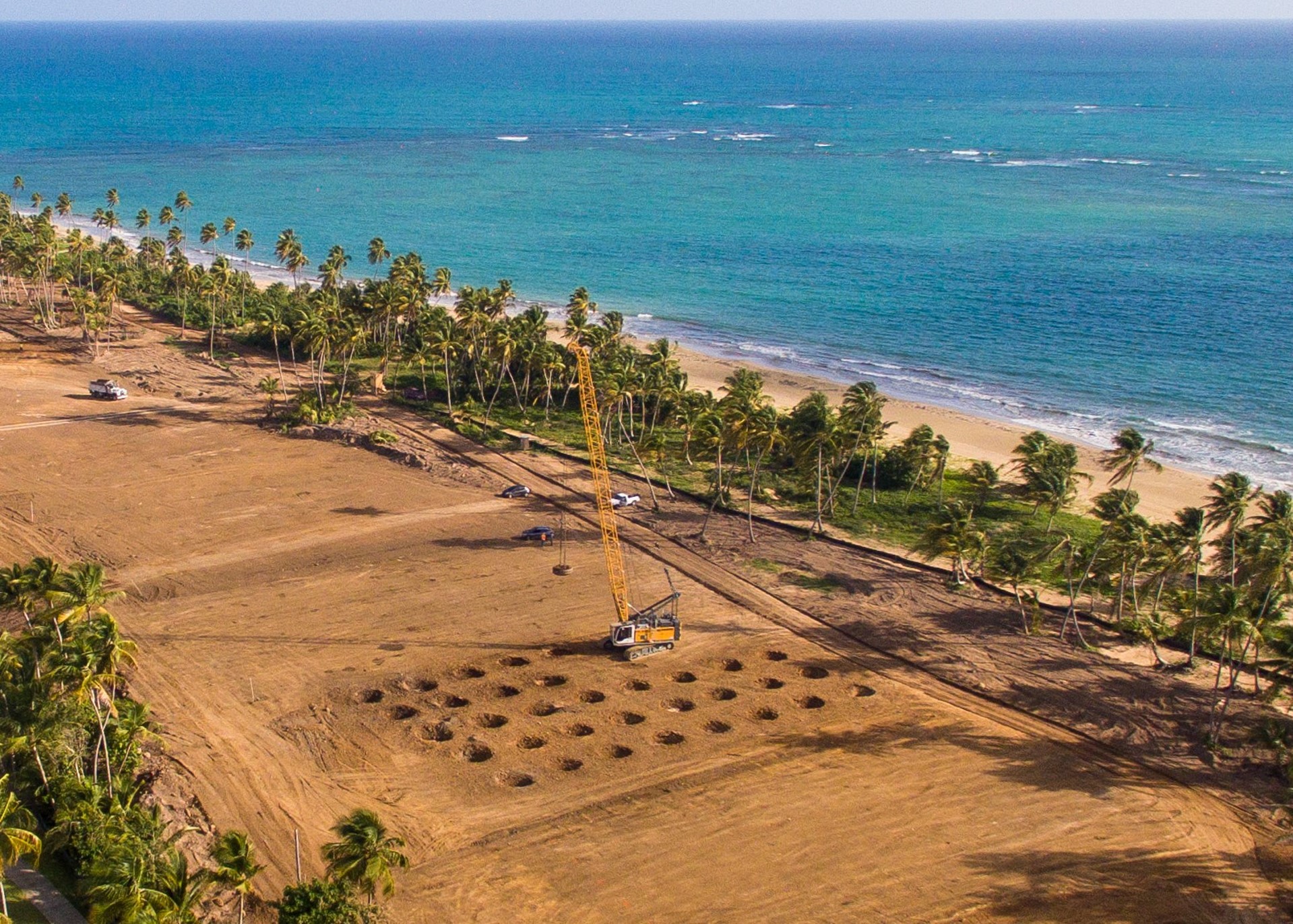
Aerial view of dynamic compaction work on liquefiable soils in Puerto Rico. (Courtesy of Densification, Inc.)
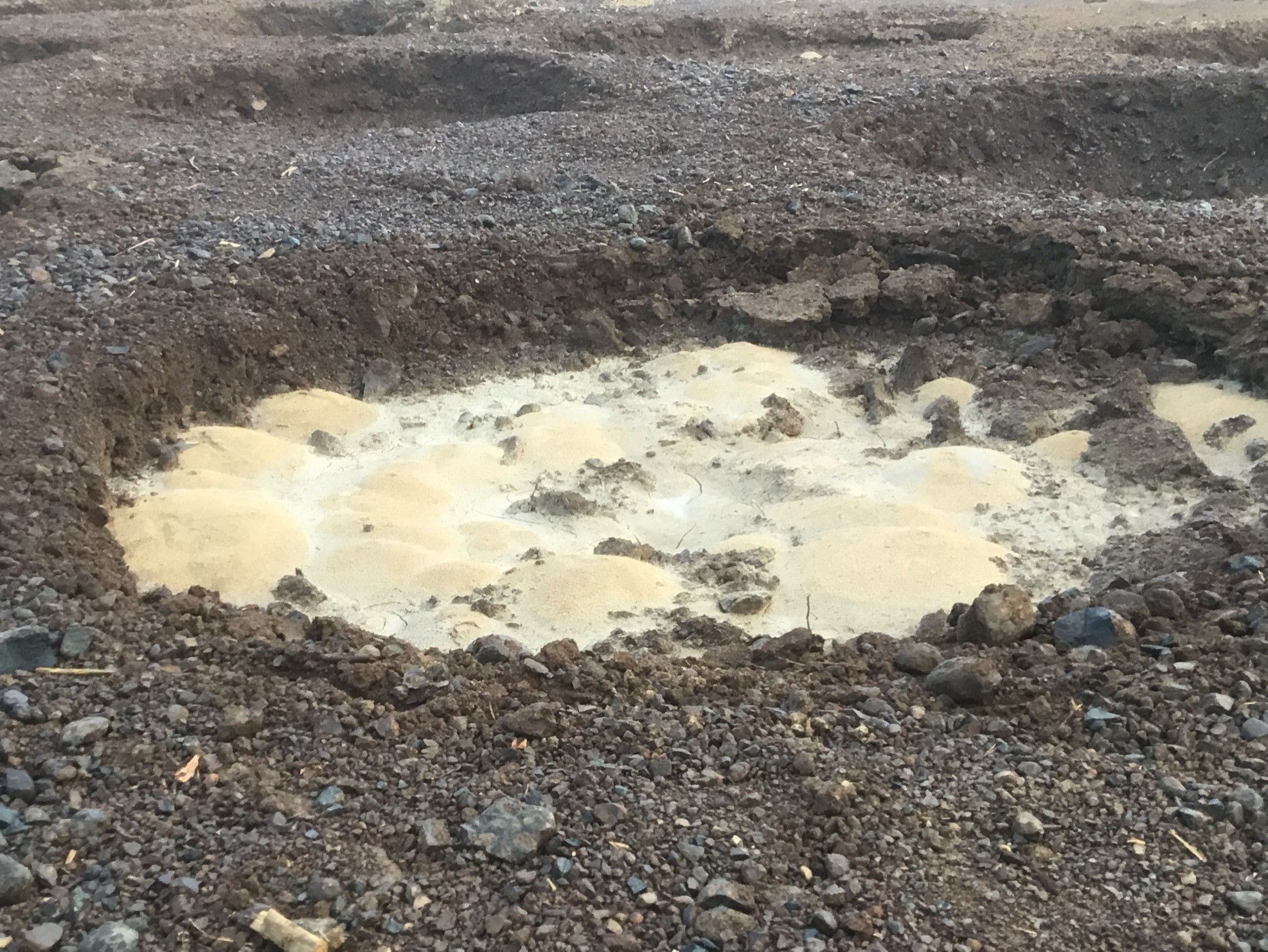
Sand boils within a crater following high-energy compaction work.   (Courtesy of Chris Woods)
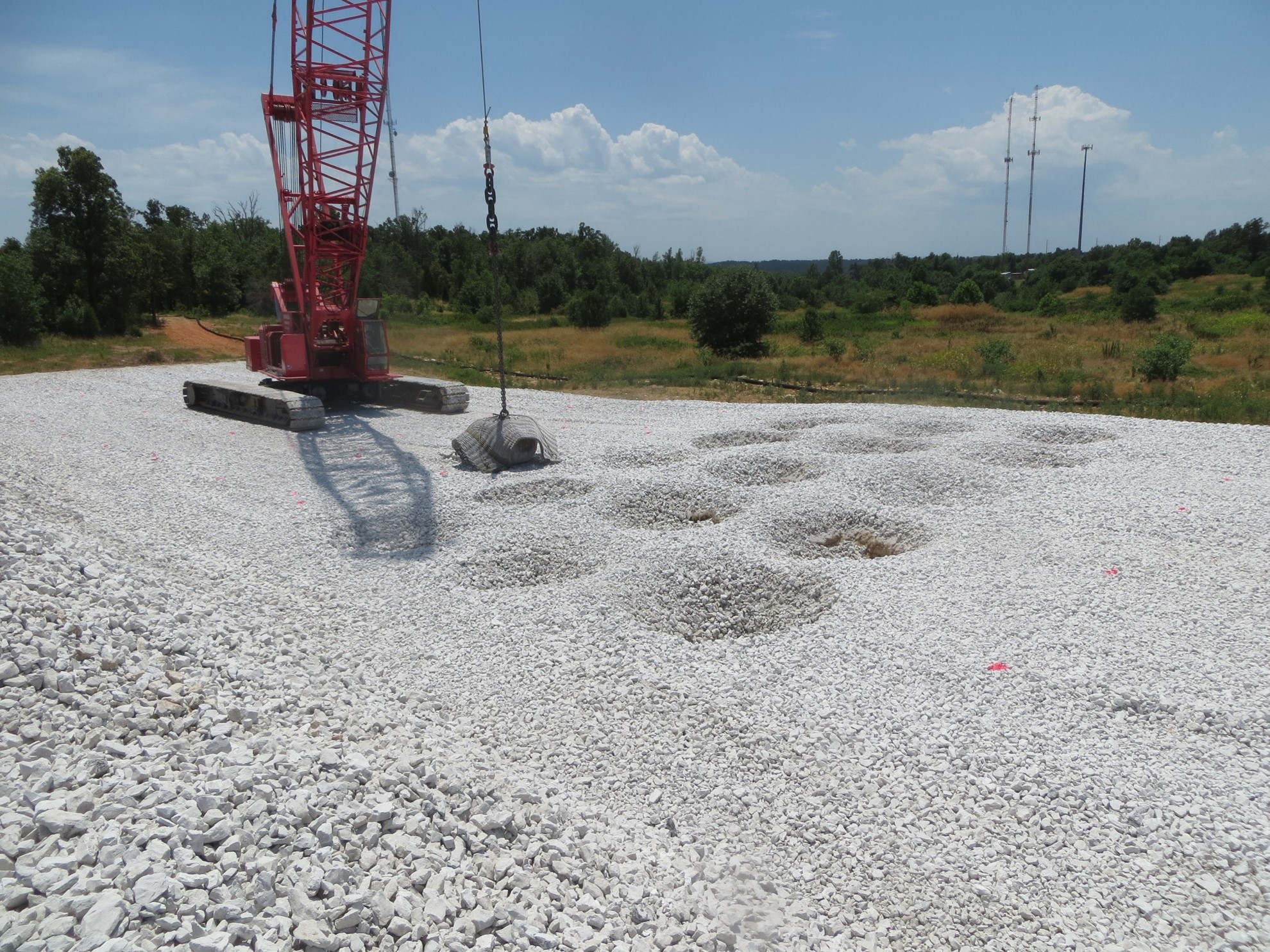
Use of a steel blast mat to protect against thrown material – I-540, Springdale, Arkansas (Courtesy of Rob Shaffer)
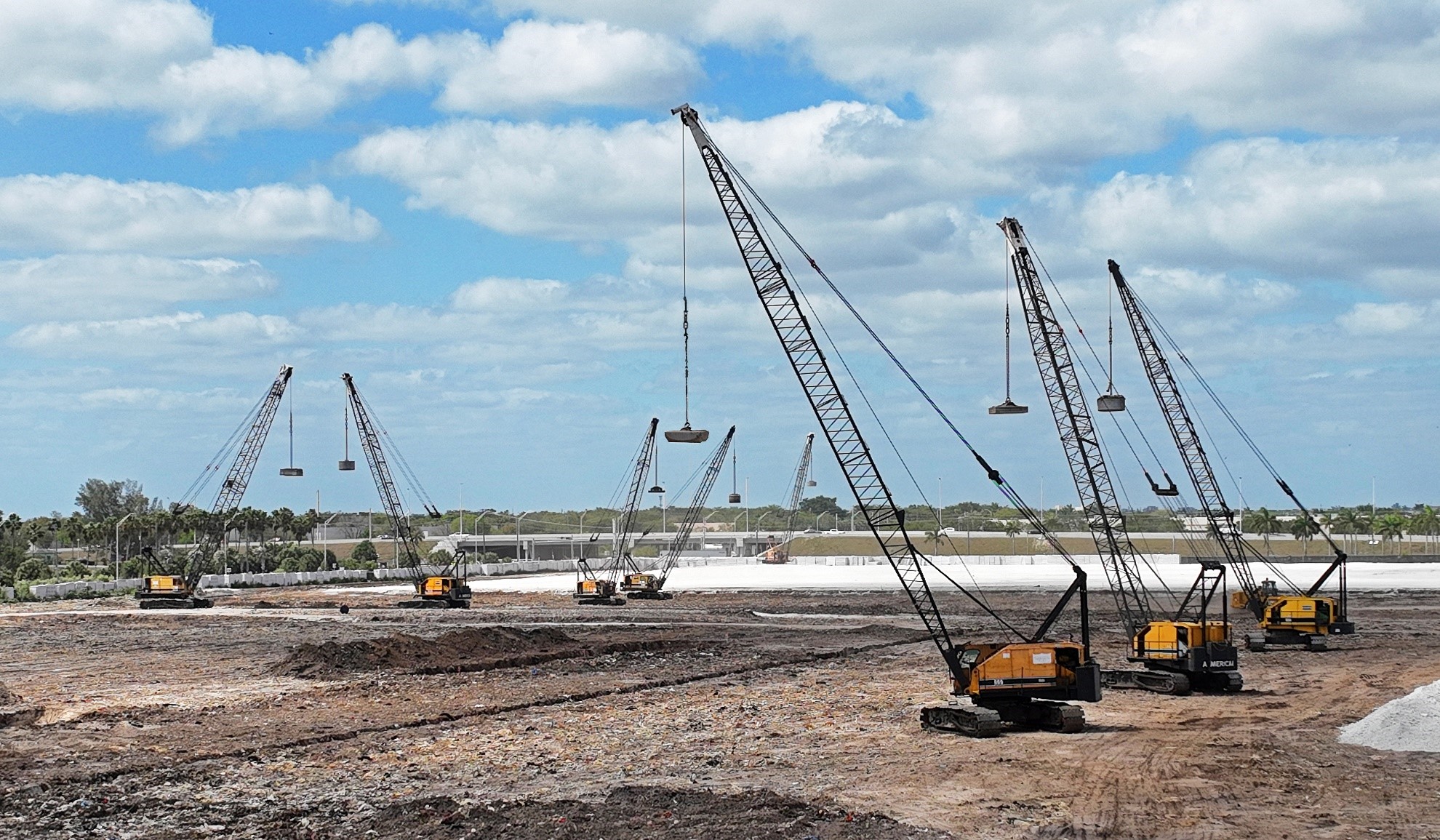
Multiple cranes at work on the same site, Miami Gardens, Florida.  (Courtesy of Densification, Inc.)
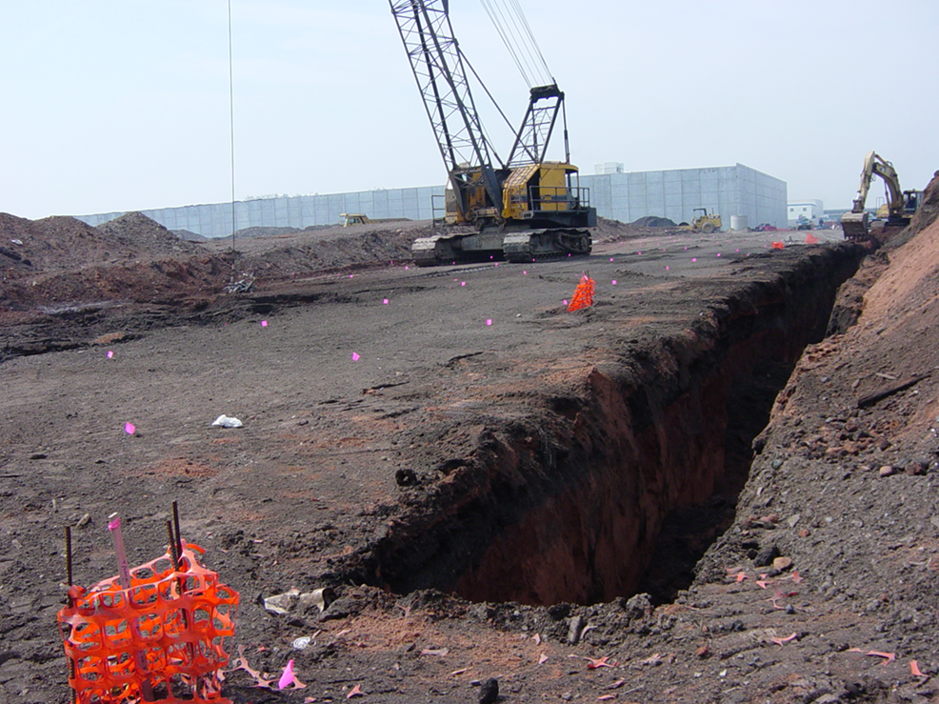
Use of a seismic cutoff trench to lessen off-site vibration levels.   (Courtesy of Langan)
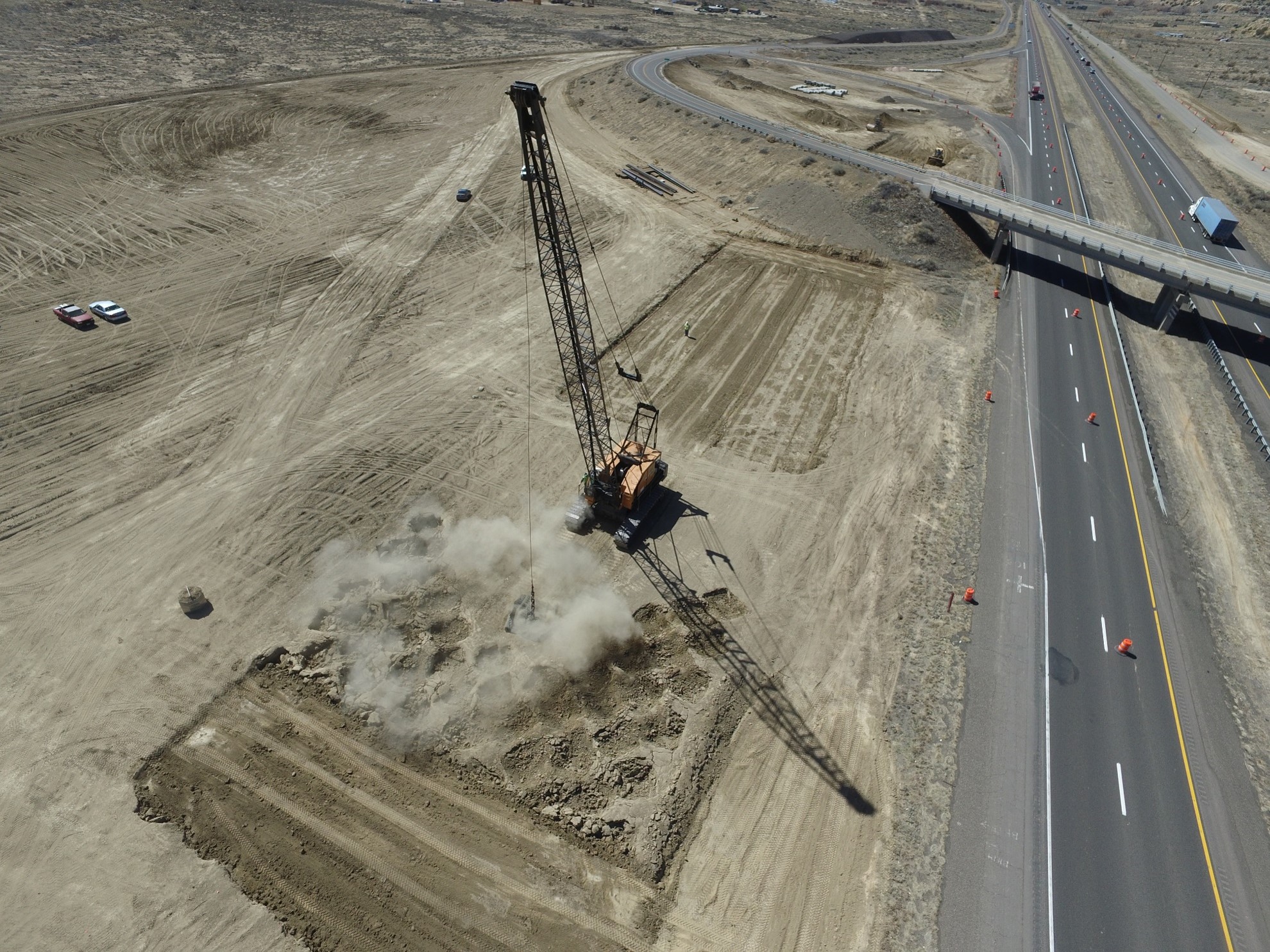
Dynamic compaction at work adjacent to I-40 in Cibola County, New Mexico.  (Courtesy of Densification, Inc.)
Typical dynamic compaction crater formation on a sandy site in Saratoga Springs, New York. (Courtesy of Densification, Inc.)
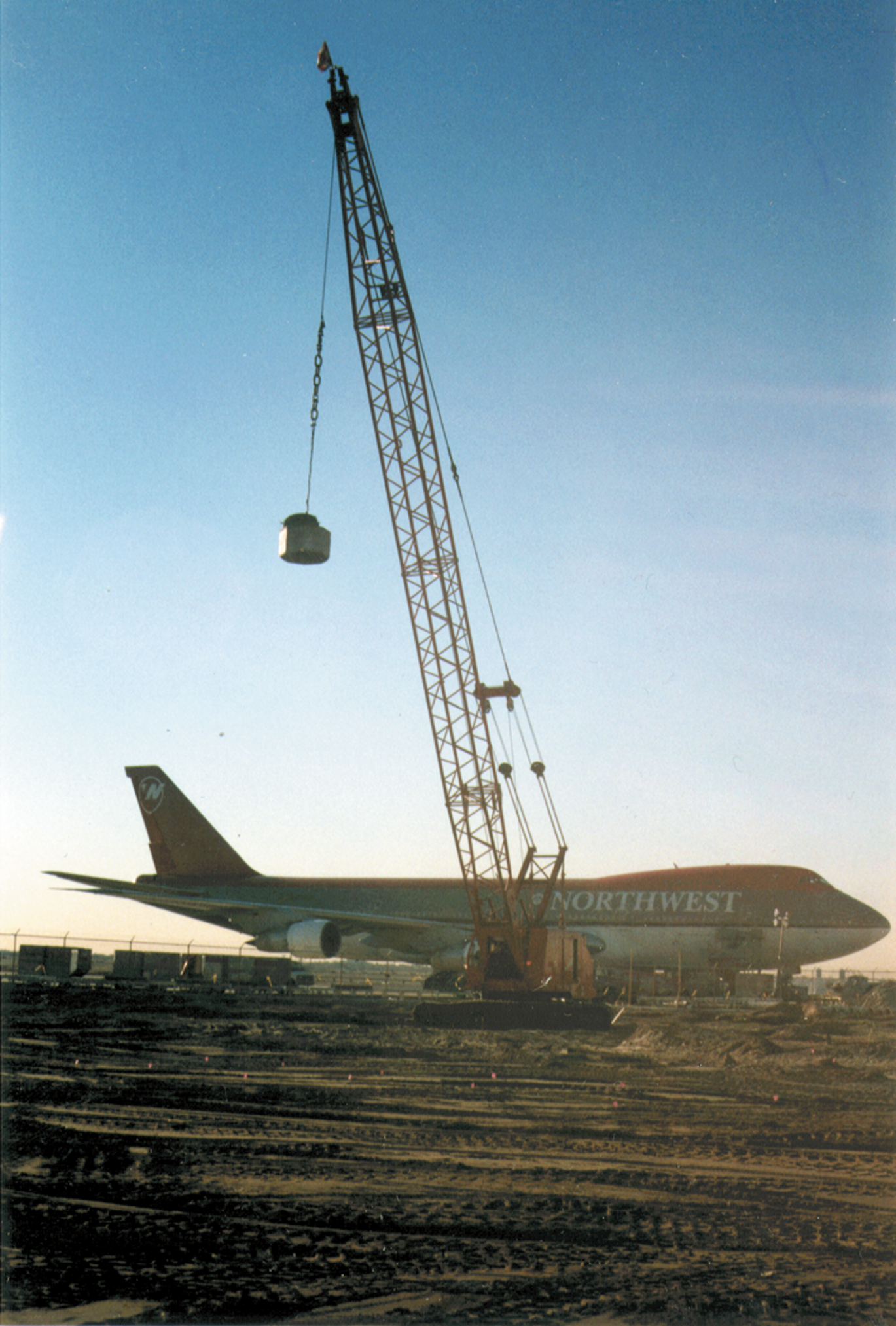
Dynamic compaction for a new terminal at JFK Airport, Queens, New York.  (Courtesy of Densification, Inc.)
Overview
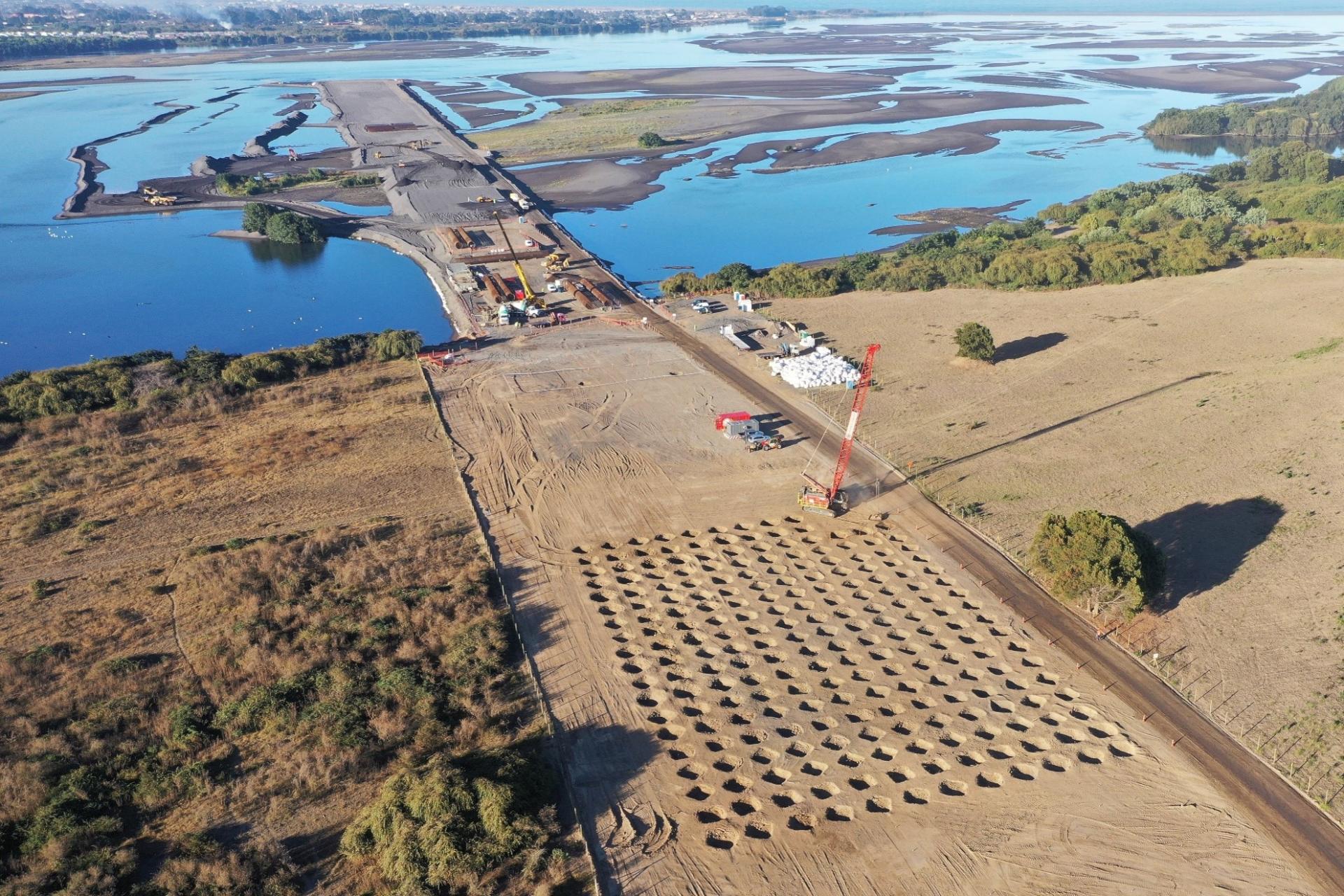
Deep Dynamic Compaction in Concepcion, Chili (Courtesy of Menard Group)

Deep dynamic compaction is the process of introducing multiple rounds of high energy impacts to ground level using steel tampers of 6 to 30 tons and dropping them from heights of 30 to 100 feet. This creates a shock wave that increases and improves the density of the soil, with depths of improvement ranging from 20 to 30 feet being commonly achieved. 

The degree of soil improvement depends on the total amount of energy applied to the soil; the more energy imparted to the soil, the greater the level of improvement. The depth of improvement is correlated to impact intensity, which is the product of the weight and the drop height.

Dynamic compaction is usually performed over a grid pattern to ensure consistency. The grid spacing, number of drops per impact point, drop height, and total number of passes is dependent on the site-specific conditions.

Advantages include suitability of application for many soil types (predominantly granular in nature with lower minus 200 percentages), creation of relatively uniform density within the improved area, cost efficiency, and extensive history of applications in practice.